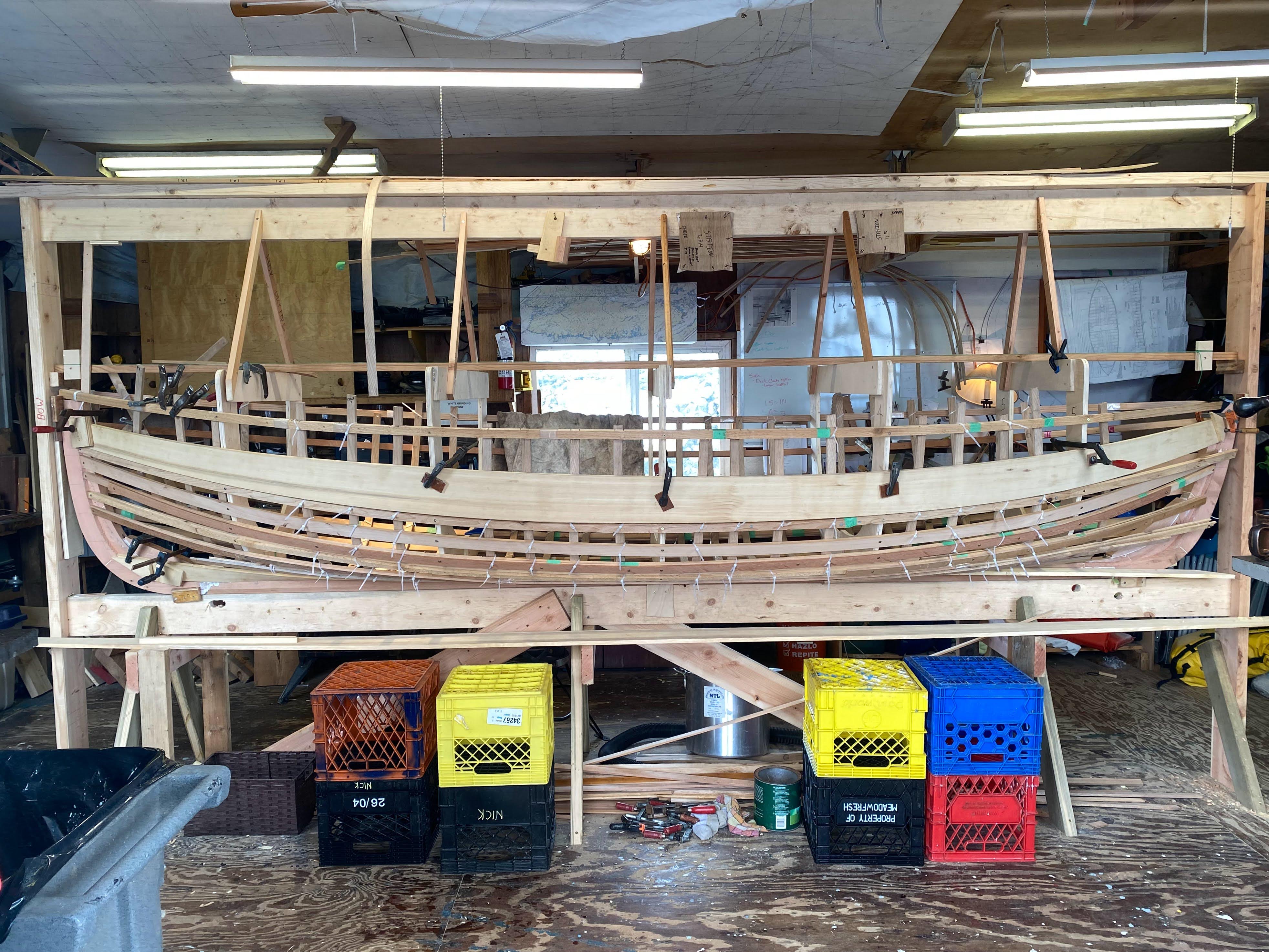
Planking has begun

We have fitted the first plank on our handliner project, and getting ready to do some riveting soon! A LOT has happened since our last post:

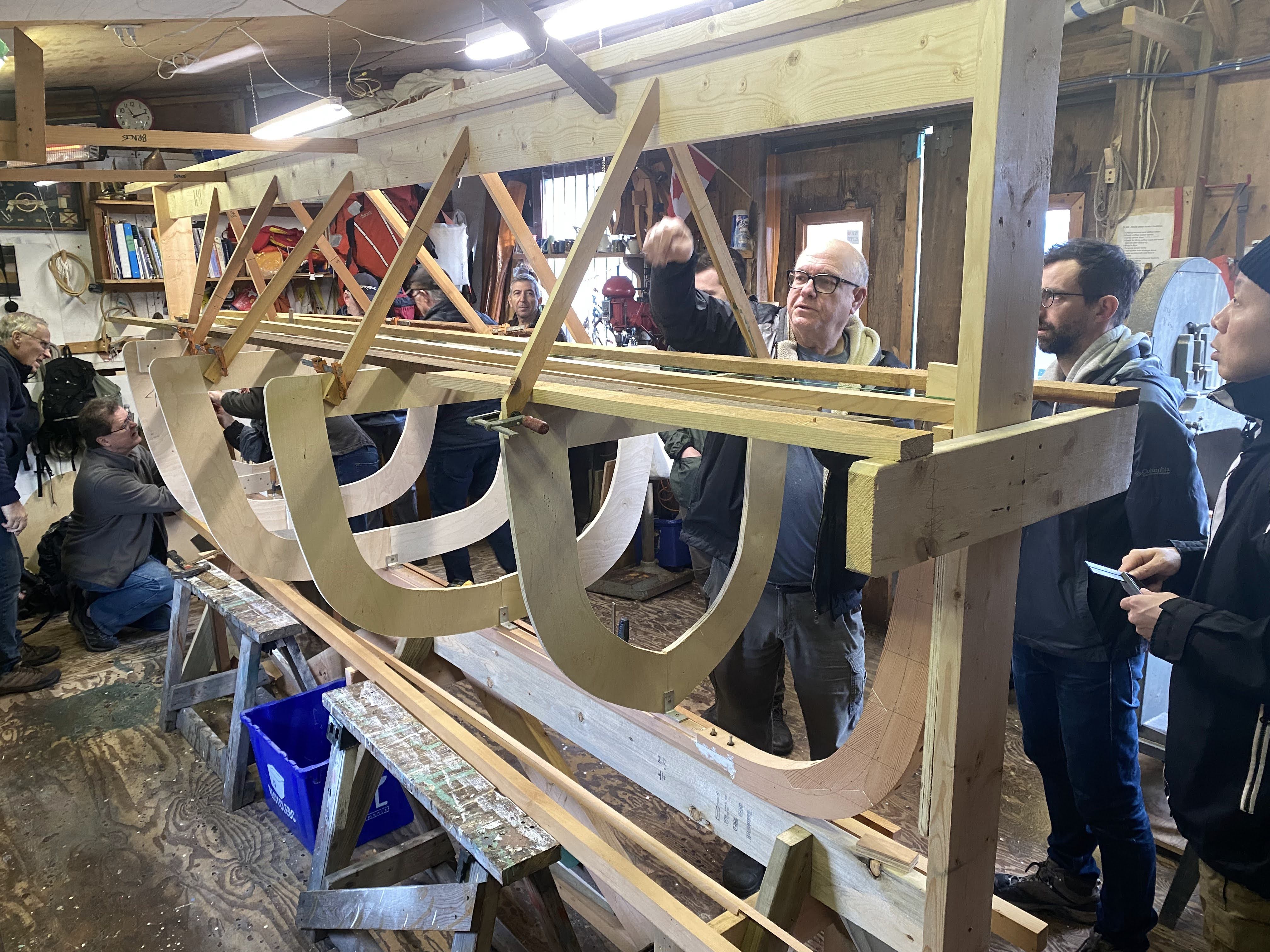
  • we finished bracing the moulds for a strong foundation
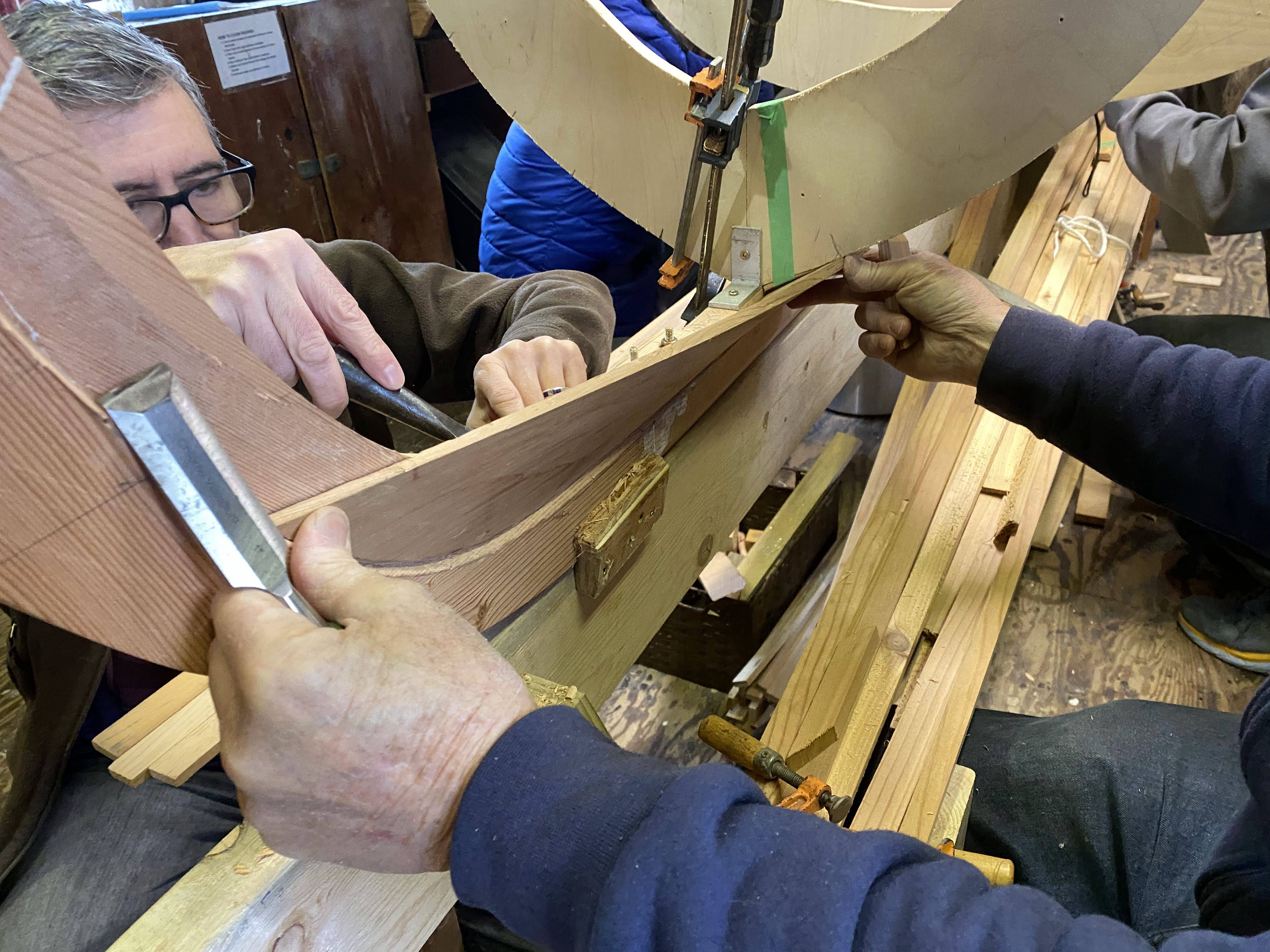
  • cut the rabbets in the stem and stern post
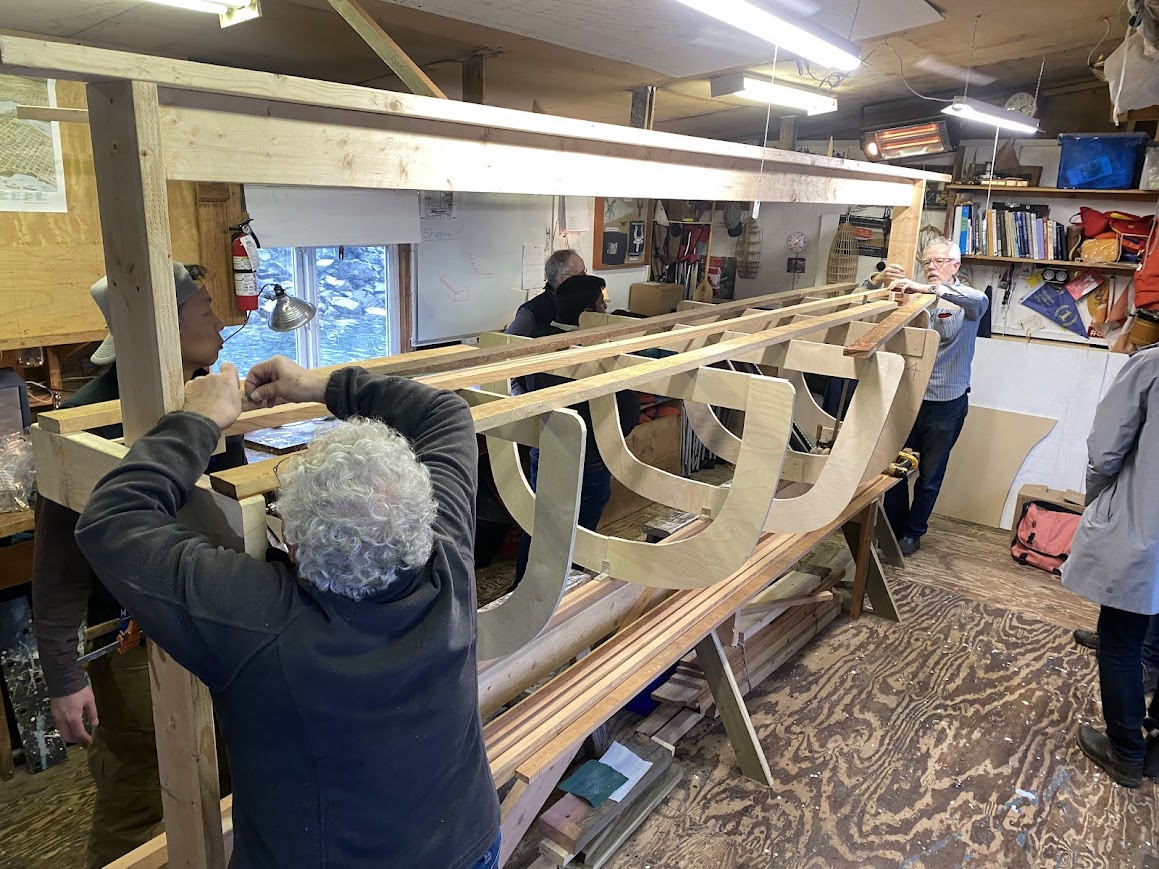
  • added ribbands (temporary longitudinal strips) to give us something to bend the ribs into
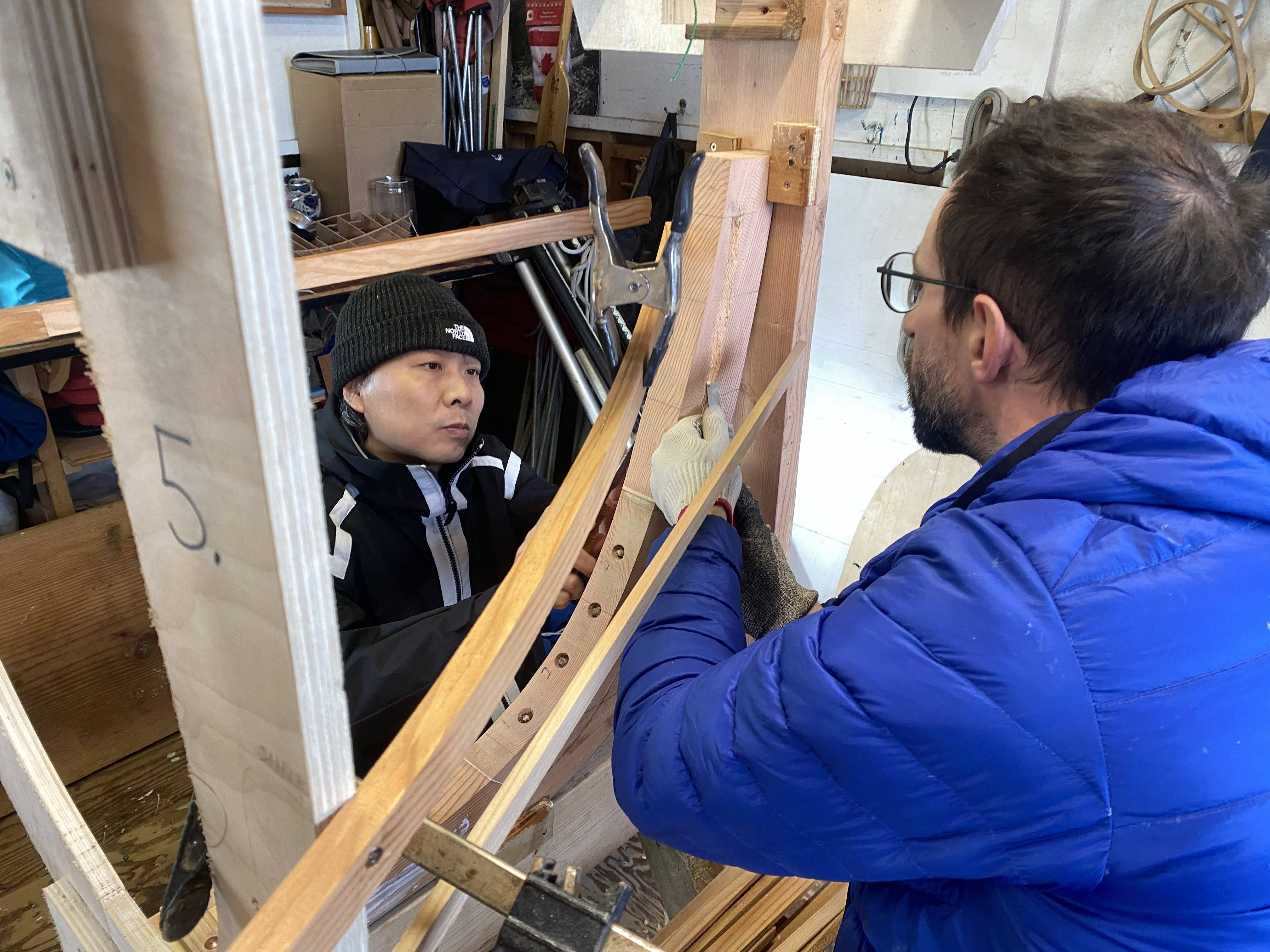
  • steam-bent all the ribs into shape
  • patterned the first planks
  • cut and rough fit the planks
  • steamed and twisted the planks into place

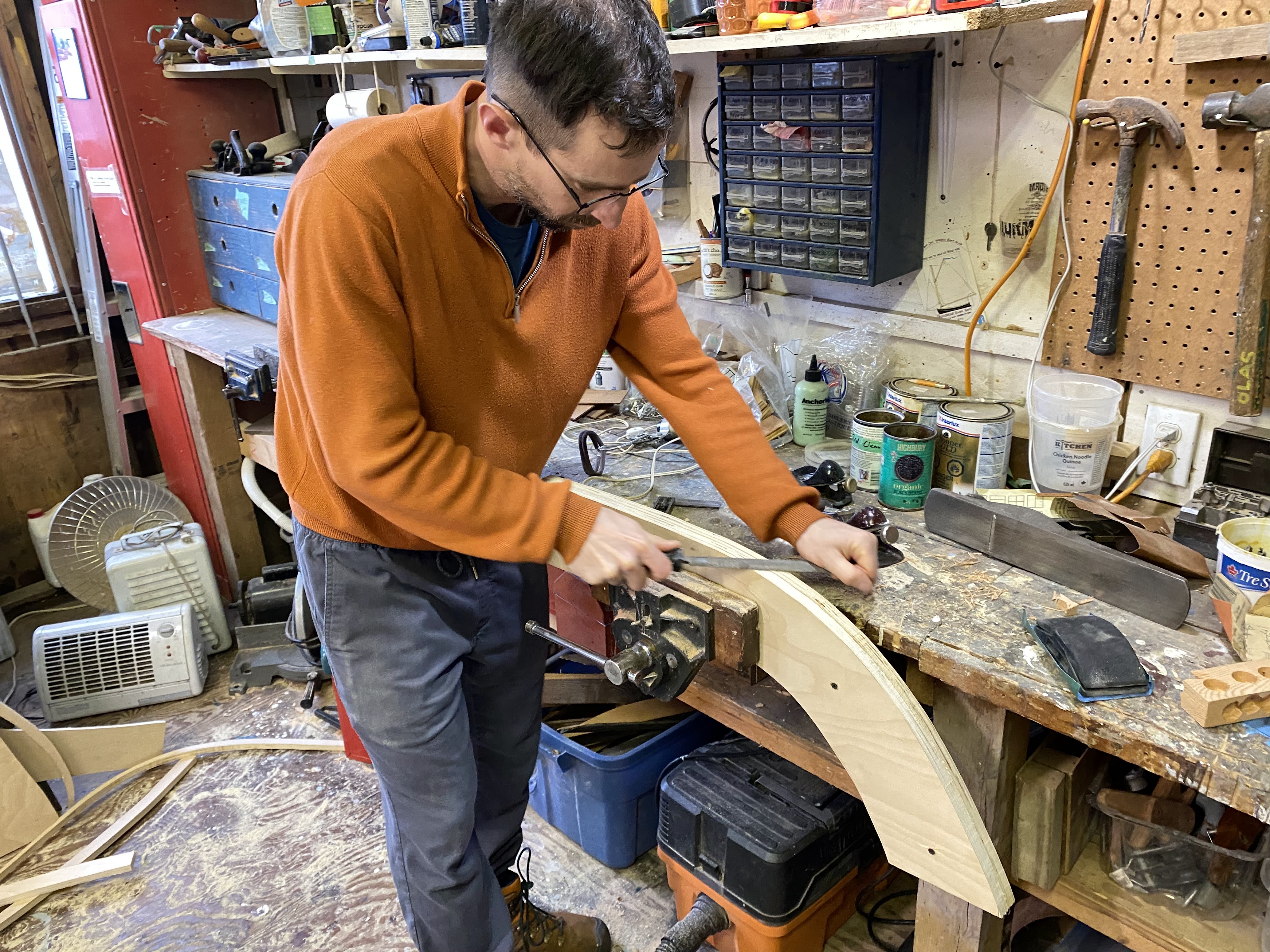
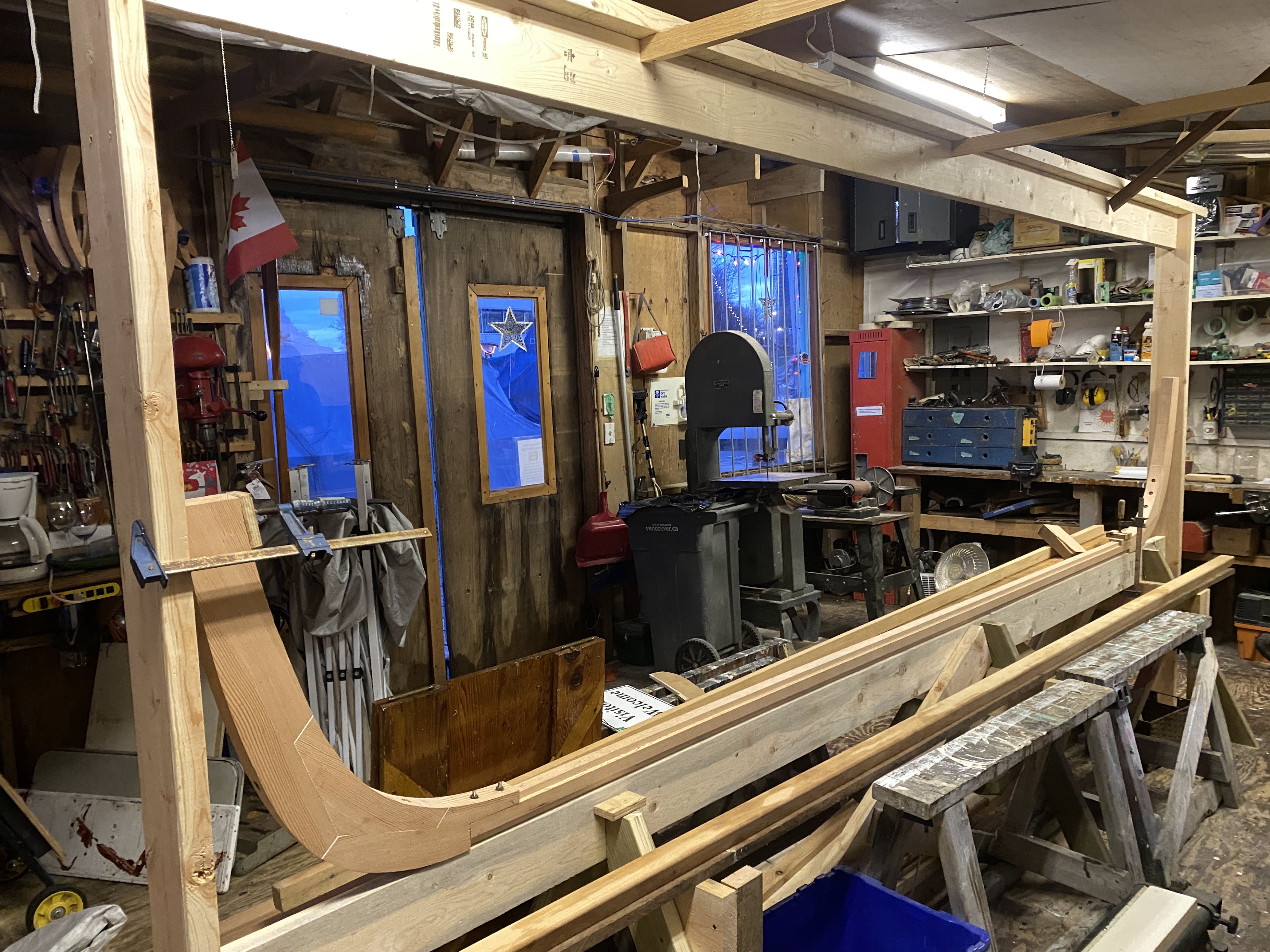
The rabbets in the stem and stern post were cut by chisel and mallet, carefully following the lines laid out from our lofting. We made some short sections of planking, steam bent into the twisted shape that the garboards (bottom-most planks next to the keel) will take at each end of the boat. That guided us in cutting the rabbet to the right shape.

Next up was the ribbands, which were screwed to the moulds. These are temporary strips that we then bent the ribs into, so they had to be strong enough to hold that force, and to keep their proper shape.

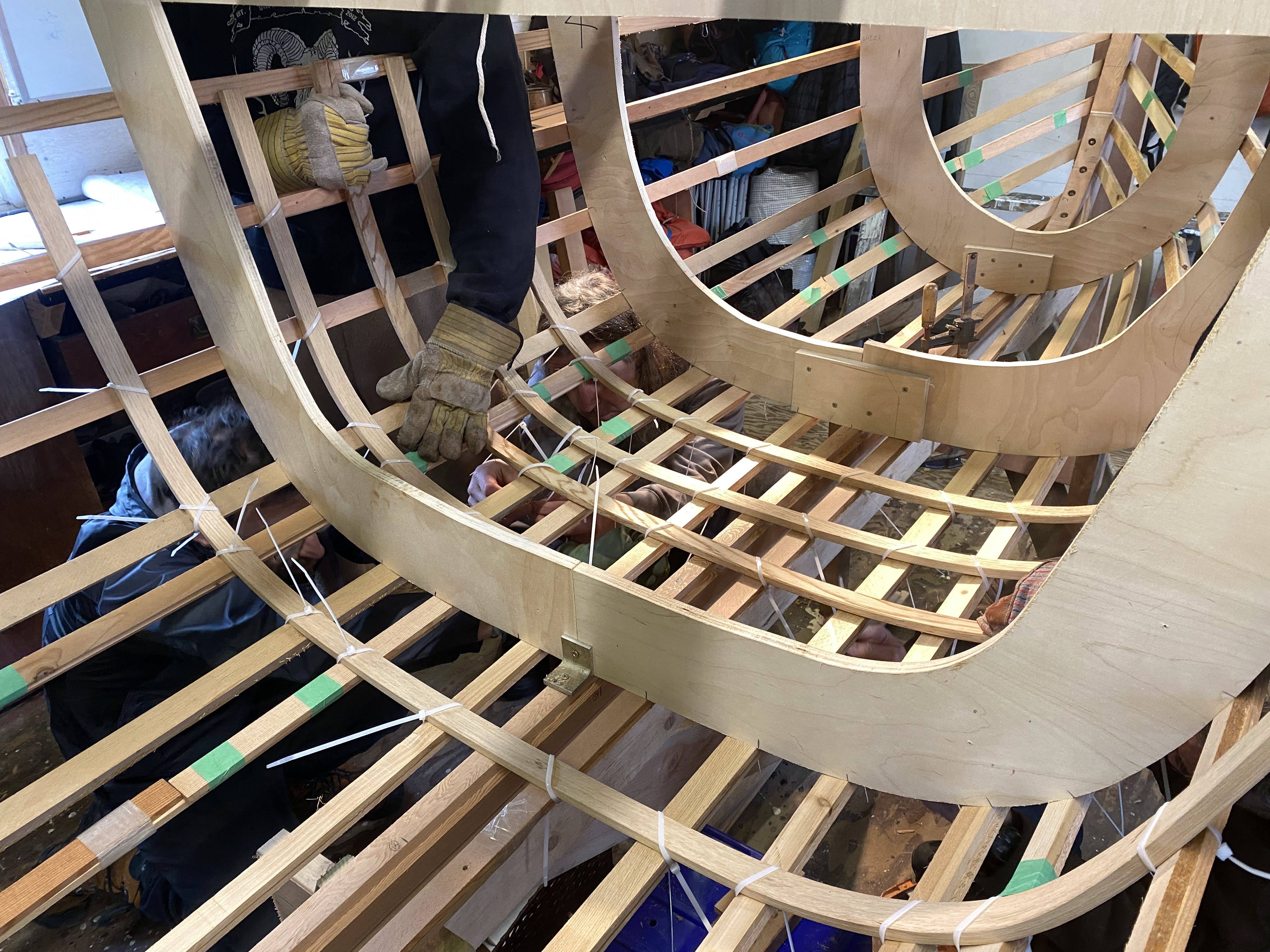
When we got to steam-bending the ribs, we found that the strips that we cut from the donated log were sadly too knotty – a lot of tiny knots that barely showed up – until we started bending them into shape, and they split or kinked. That was a disappointing turn of events – we had been quite hopeful that we could use that great local source of material. And it meant that we had to go and buy a board of suitable white oak. THAT was then cut into strips, and successfully bent in shape, thank goodness!
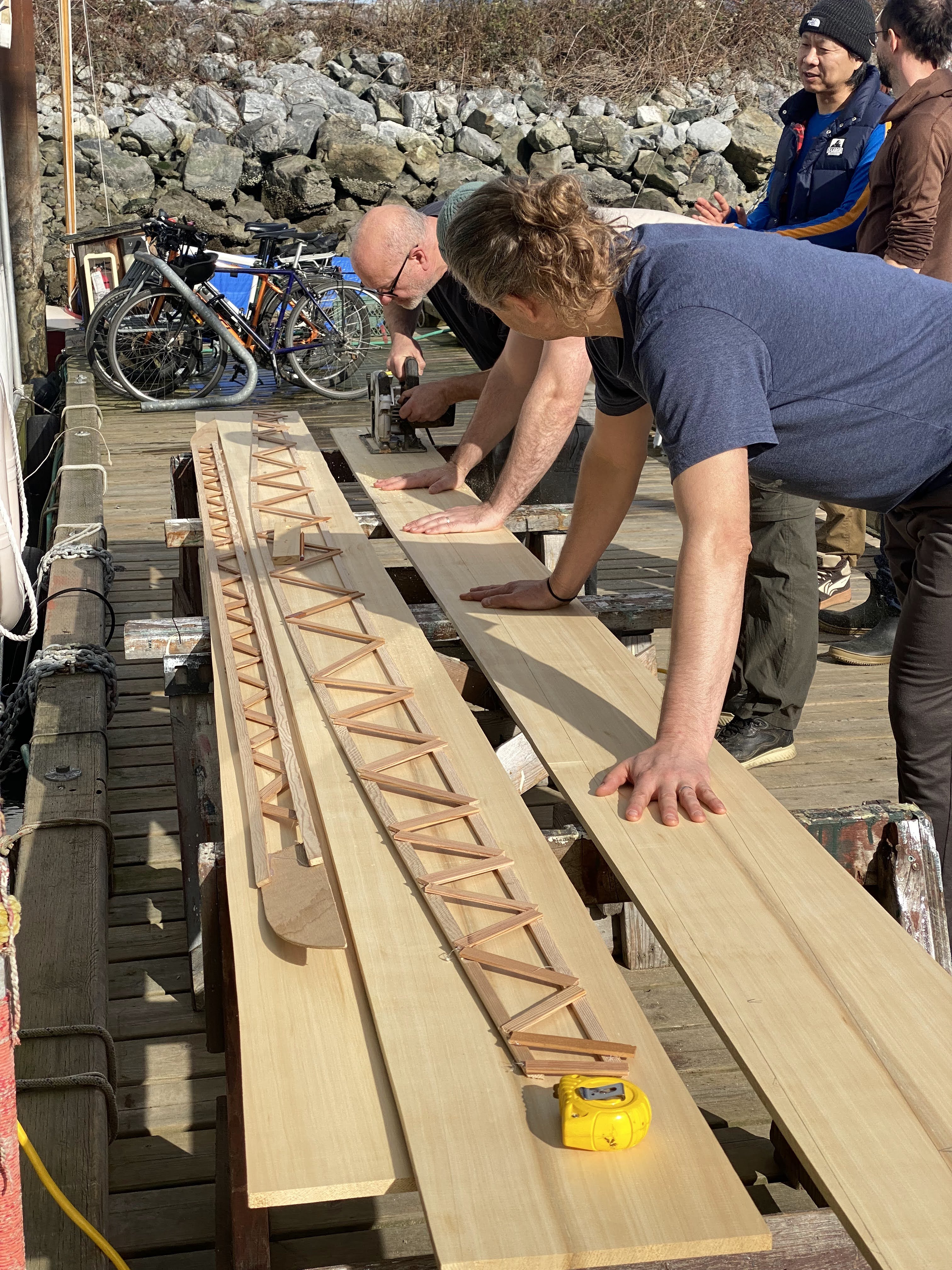
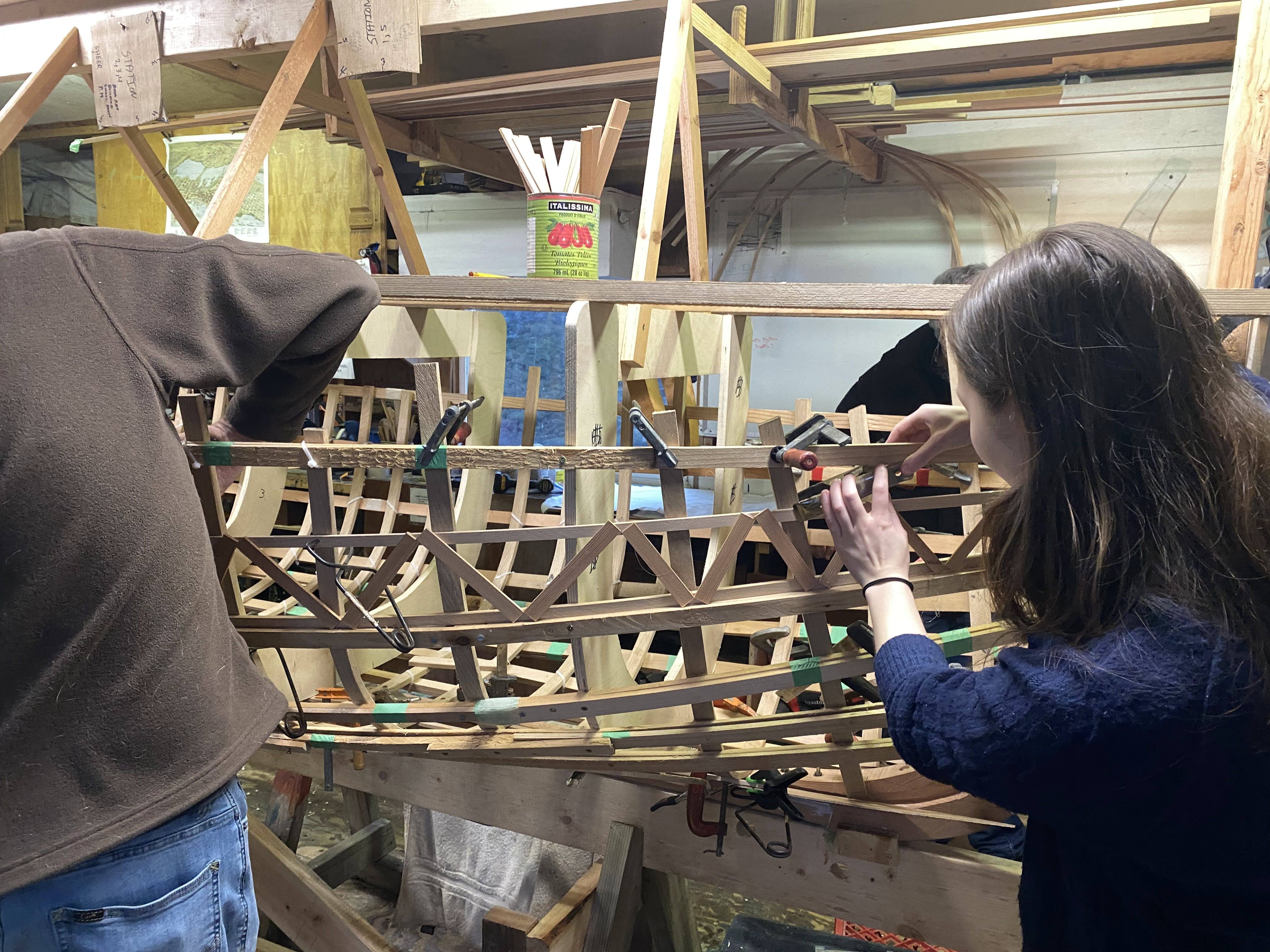
Next we formed the patterns for the sheer strake and garboard, using the lattice method – a batten was placed at each edge of where the plank will go, and connected to each other with a series of sticks hot-glued together.

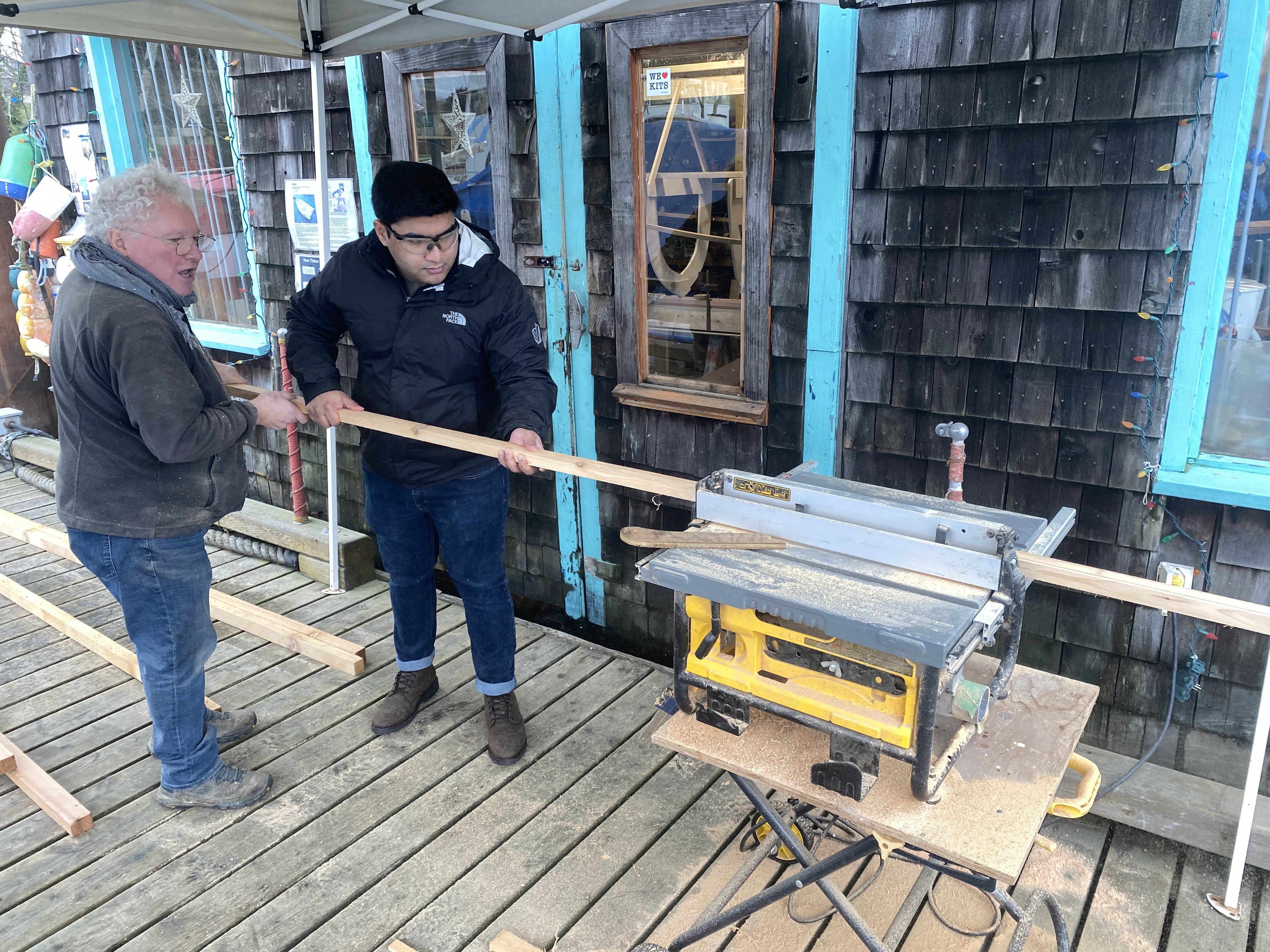
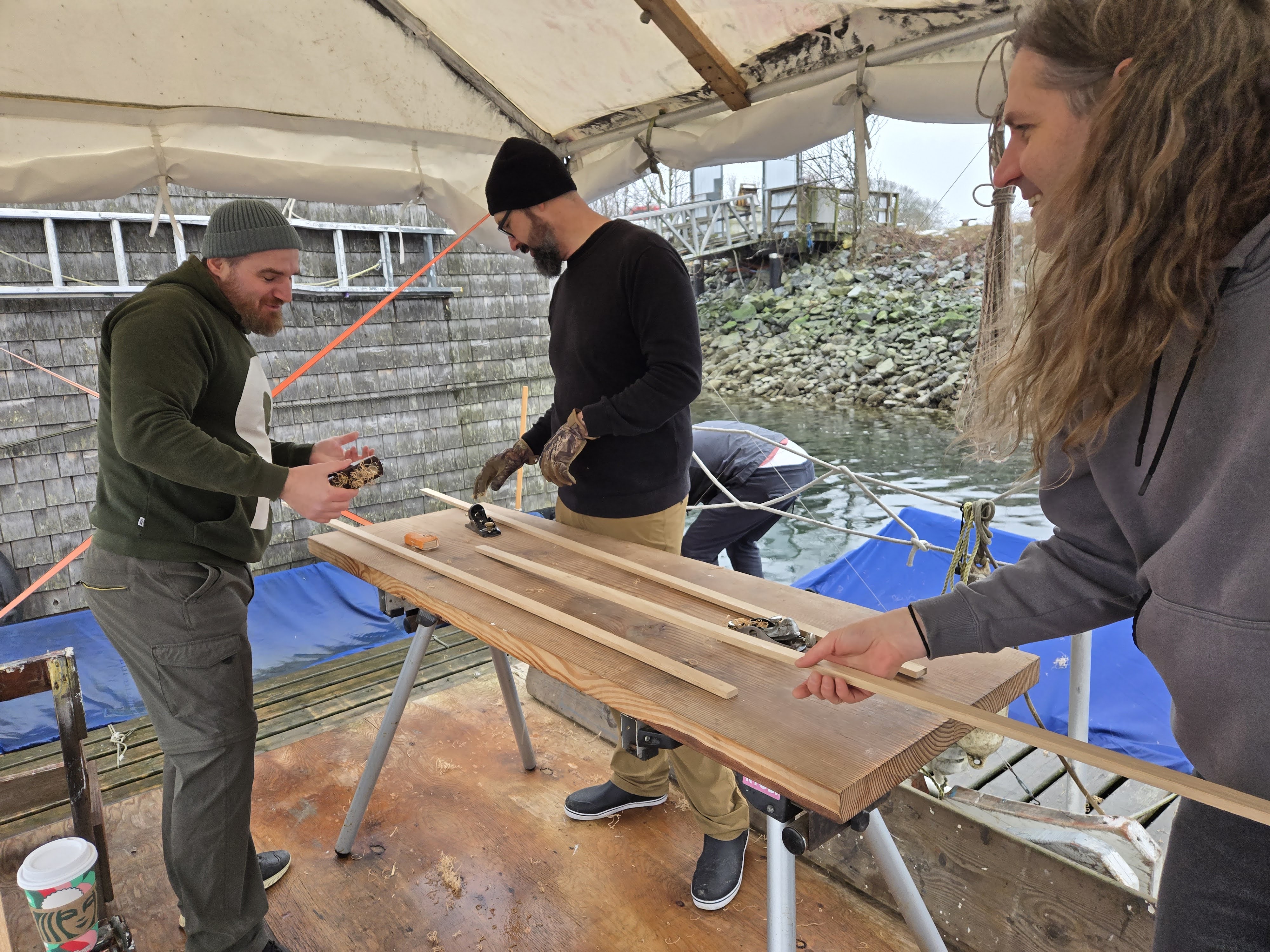
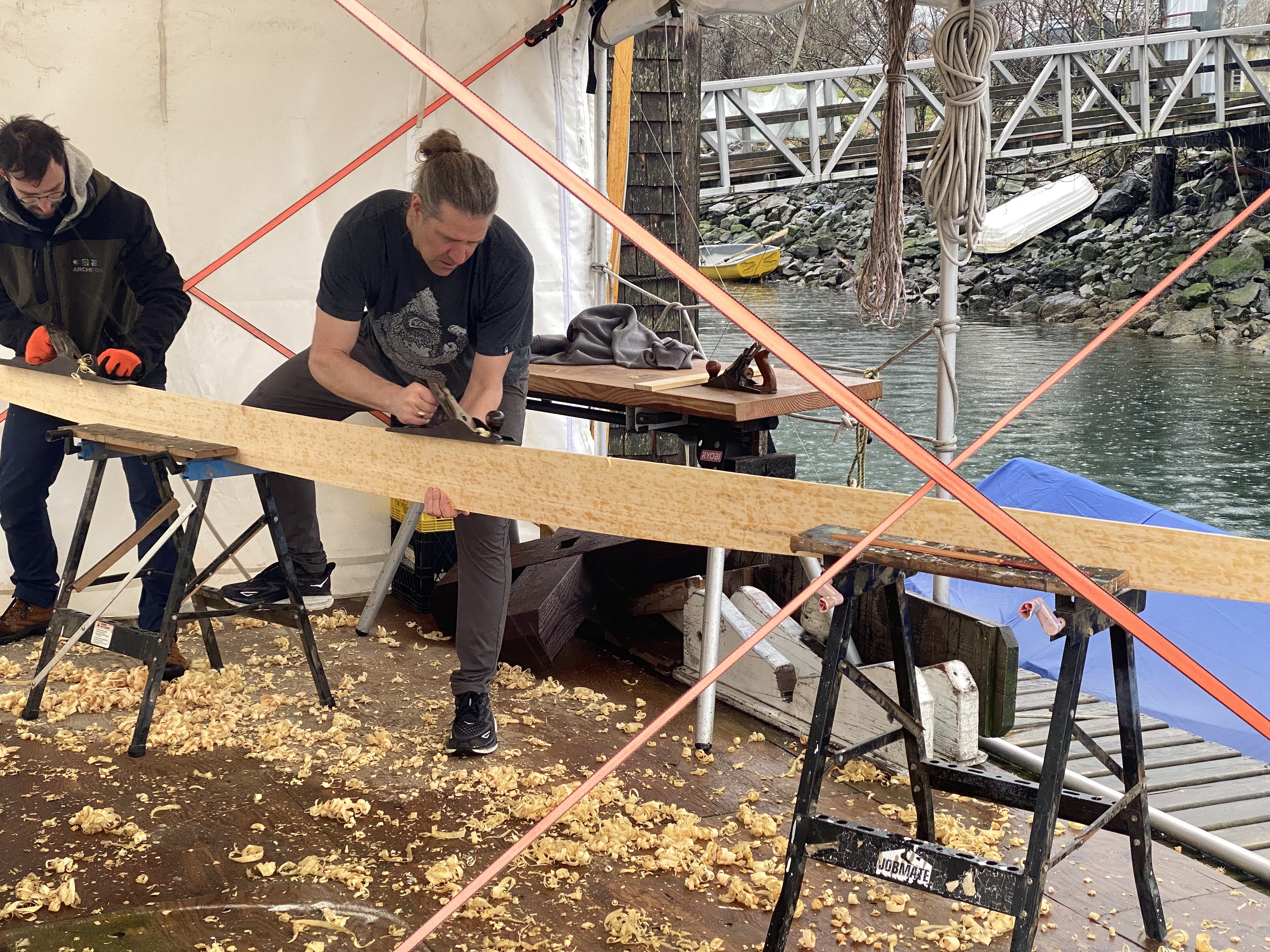
That pattern was then laid on our yellow cedar planking stock, and cut to rough shape, then refined by hand plane, creating lots of fragrant shavings!
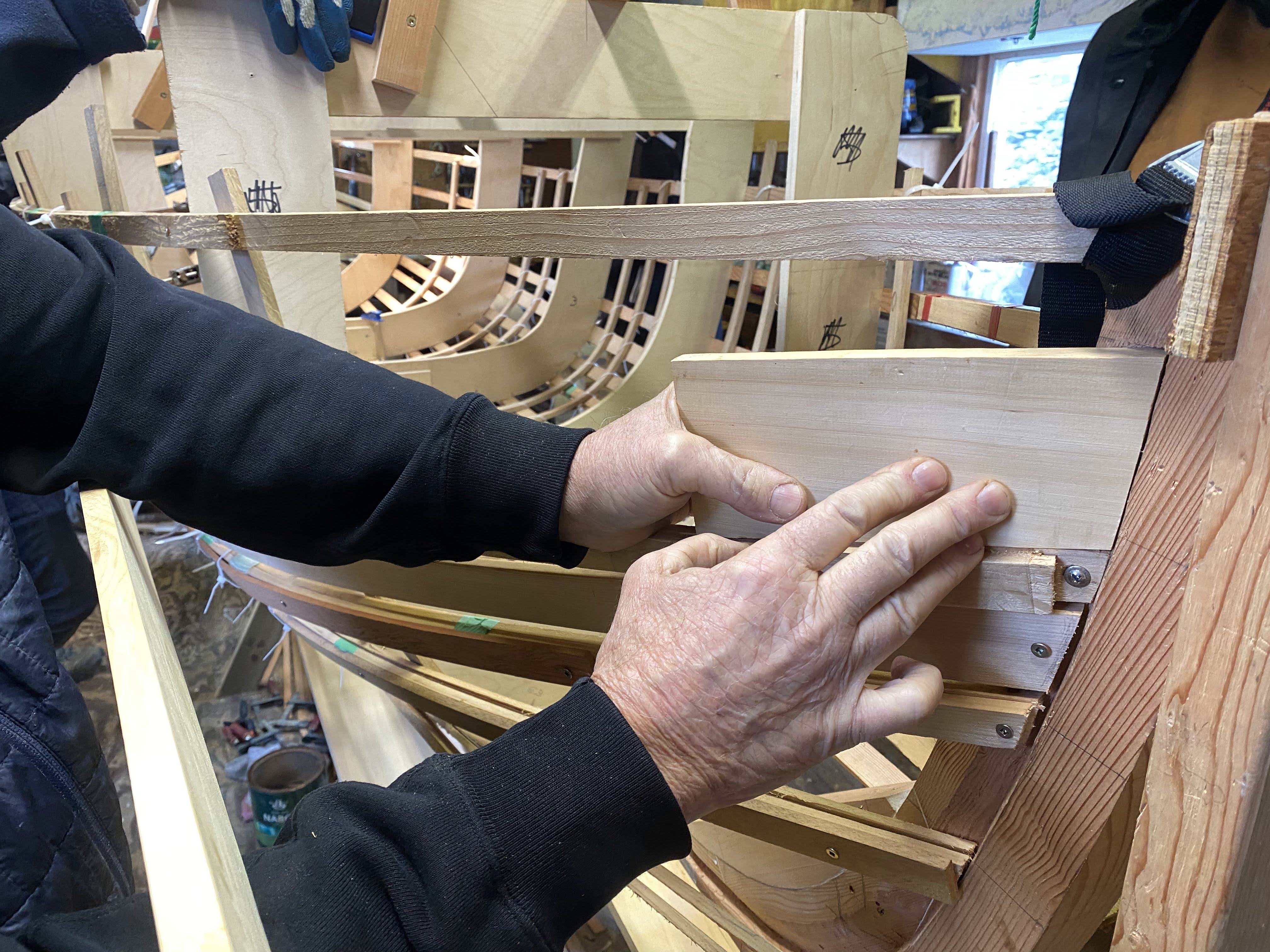
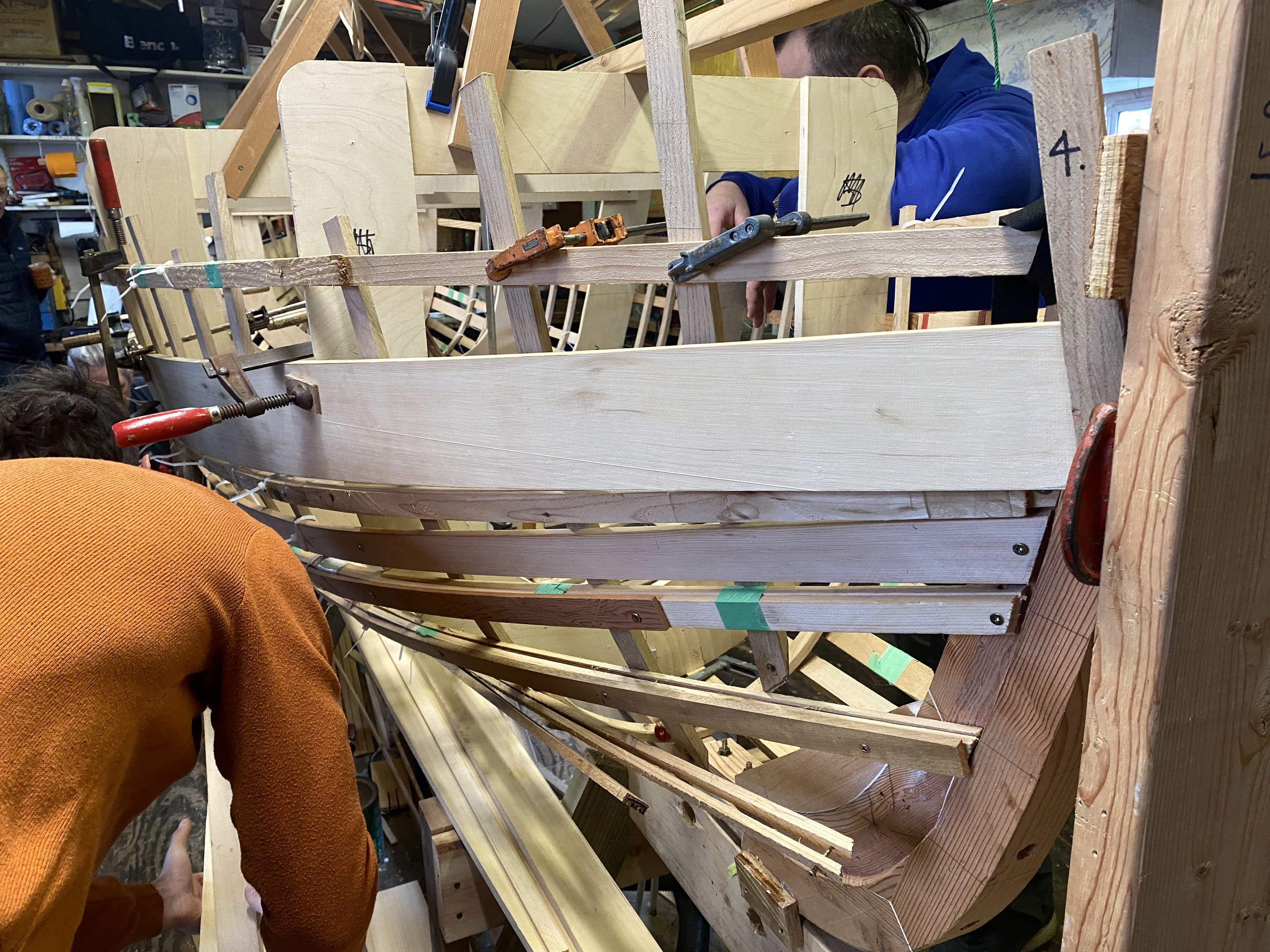
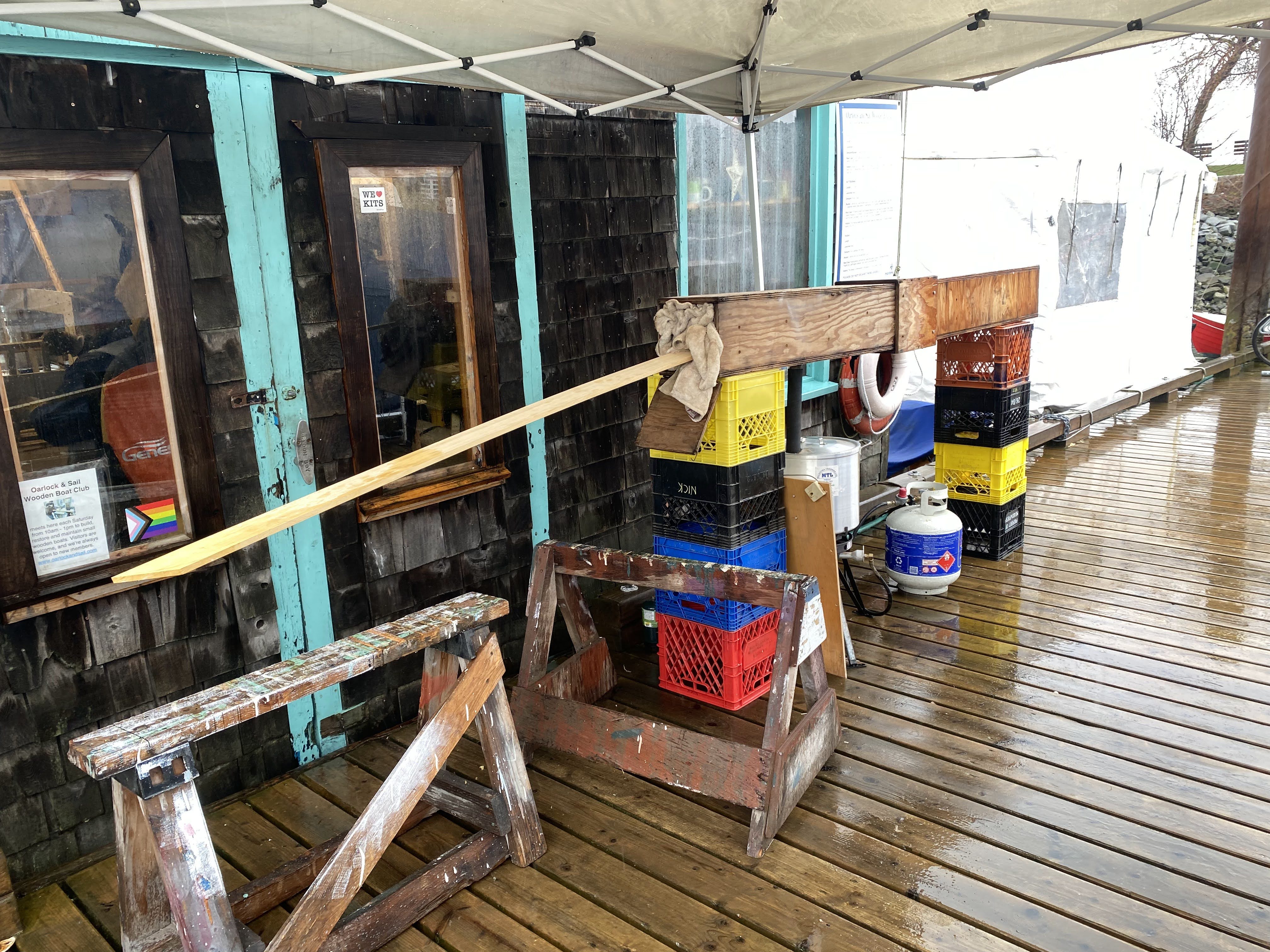
After that, we carefully shaped the ends of the planks to fit to the rabbets at each end, and used our steam box to heat each end so we could twist them into shape. The sheer strakes are close to final shape, and the garboards each have one end twisted, and the other end still needs to done.

We’ll still have some backing out (hollowing the inside face of the plank) so the planks fit closely to the ribs before we start doing any fastening, but it’s great to see some planks at least clamped to the boat!


Besides the boat-building, we’ve also been busy with some open house and Family Day events in partnership with the Vancouver Maritime Museum. Last Saturday we had a table set up in the museum showing some of our tools and planking patterns. A couple of our members, Tom & Georgina performed some music and story-telling, and Rob gave a talk about wooden boatbuilding, our club, and our boats. The day was very well-attended, and we welcomed many appreciative visitors into our shop!


A while ago we had a UBC Journalism student hang out with us in the shop for a few Saturdays, taking photos and video, interviewing members, and observing us in our work. He shared his final submission with us, and I think it looks fabulous!! Thank you Ashrit for sharing this with us!

https://ubcjournalism.shorthandstories.com/oarlock-and-sail-wooden-boat-club/index.html
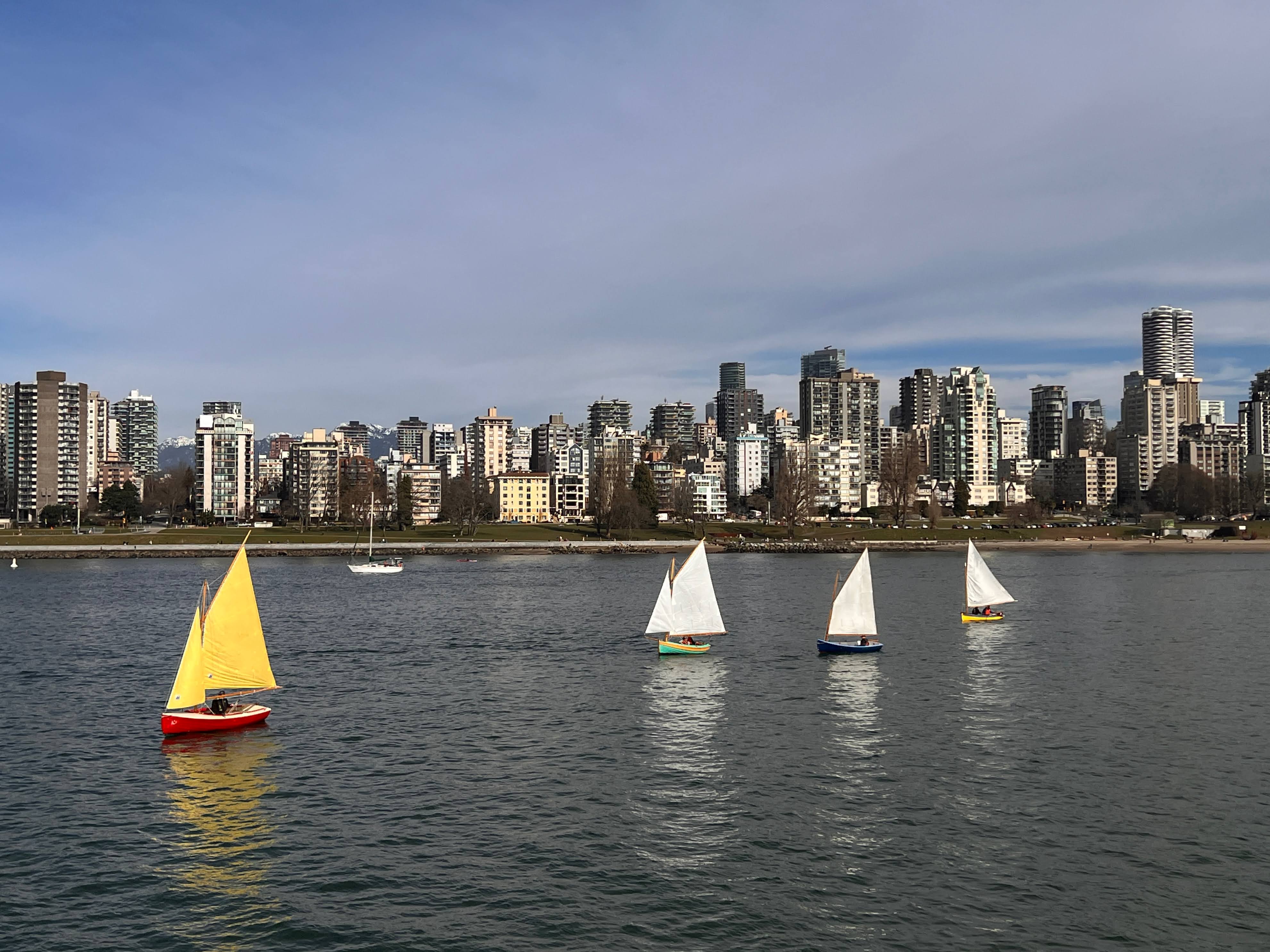
photo by Jenny

Handliner progress

We’ve got a great start on our Handliner build – our progress in the past couple of months:ย ย 

  • Lofting
  • Lofting completed
  • Stem and stern post patterned, cut, and joined
  • Moulds patterned, cut, and joined
  • Ribs ripped from log (thanks Eric!)
  • Rib and plank sample
  • Strongback revised for upright construction
  • Keel, stem and stern post joined
  • Moulds mounted

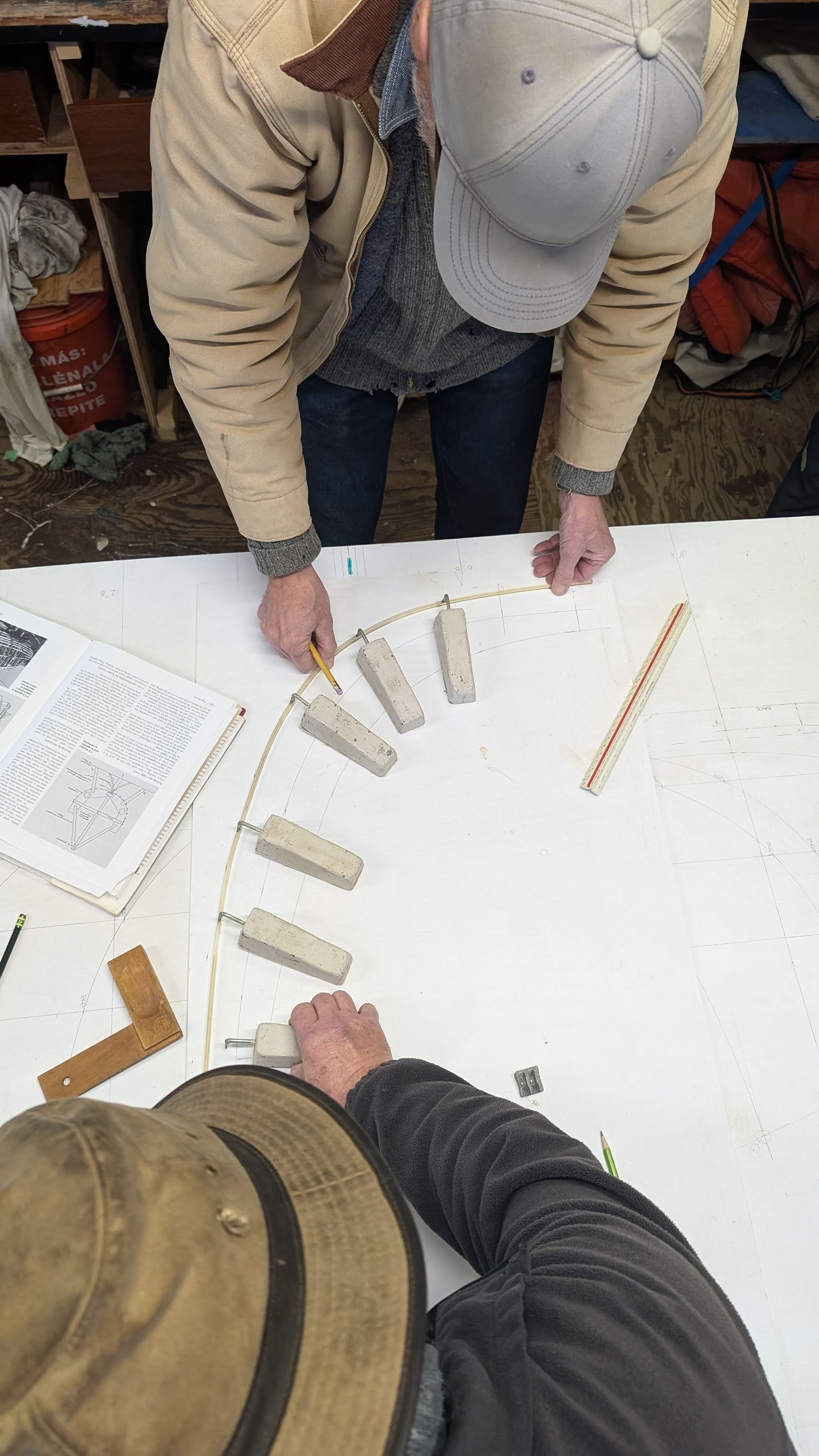
We completed lofting the plans, which involves plotting out all the points given on the table of offsets on the drawings. This gives us the shapes of the moulds, stem, and stern post which then provided the shape of the patterns for the final pieces. A drafting spline and set of lead “ducks” gave us a fair curve. “Many hands” took the place of the ducks sometimes – participation is high!

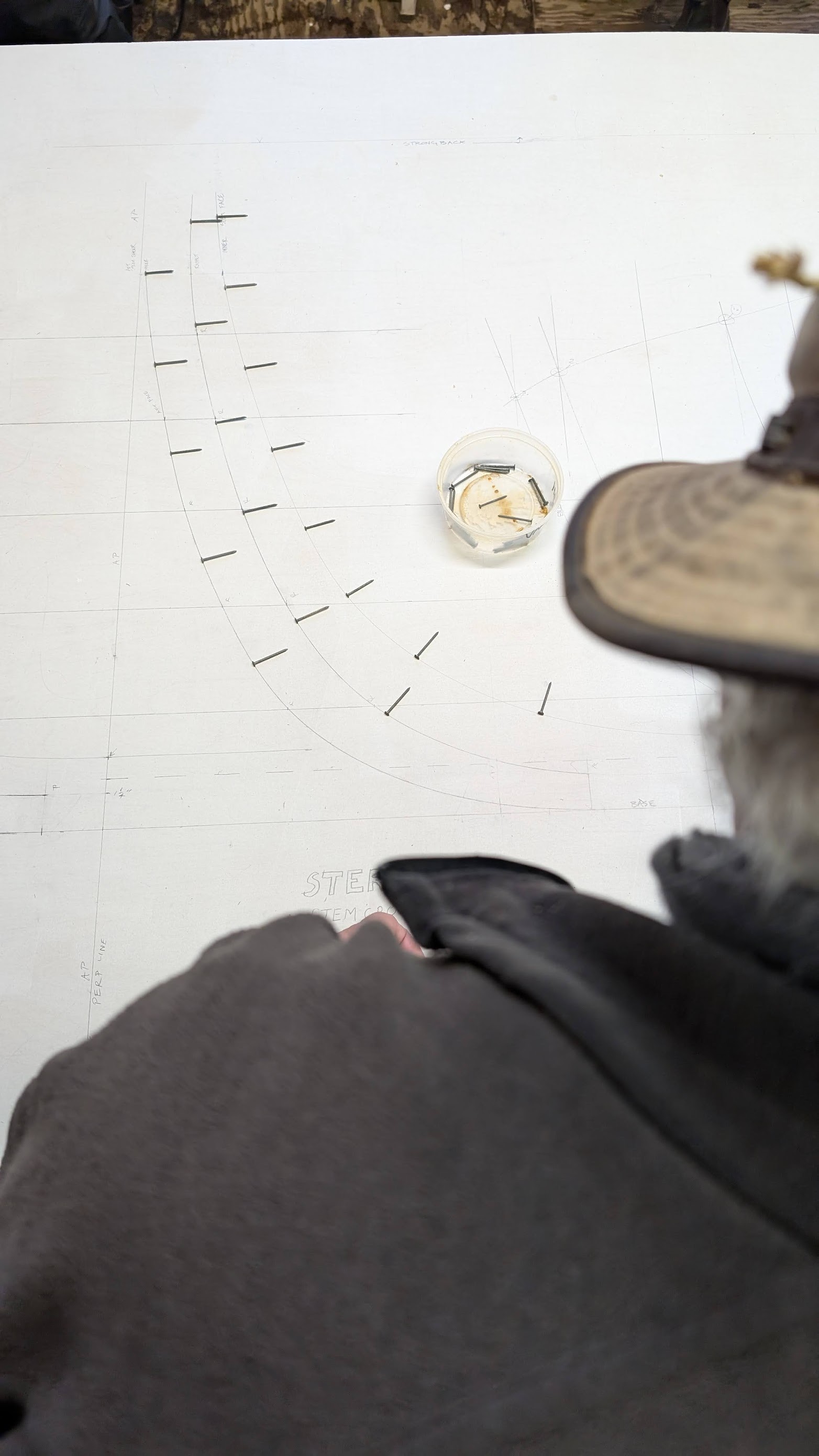
Once we had drawn the shape, we pounded in some nail-heads to transfer the lines to the patterns – the indents from the nails gave us the marks for the outline. After that, we cut out the patterns, and used them for the actual pieces.

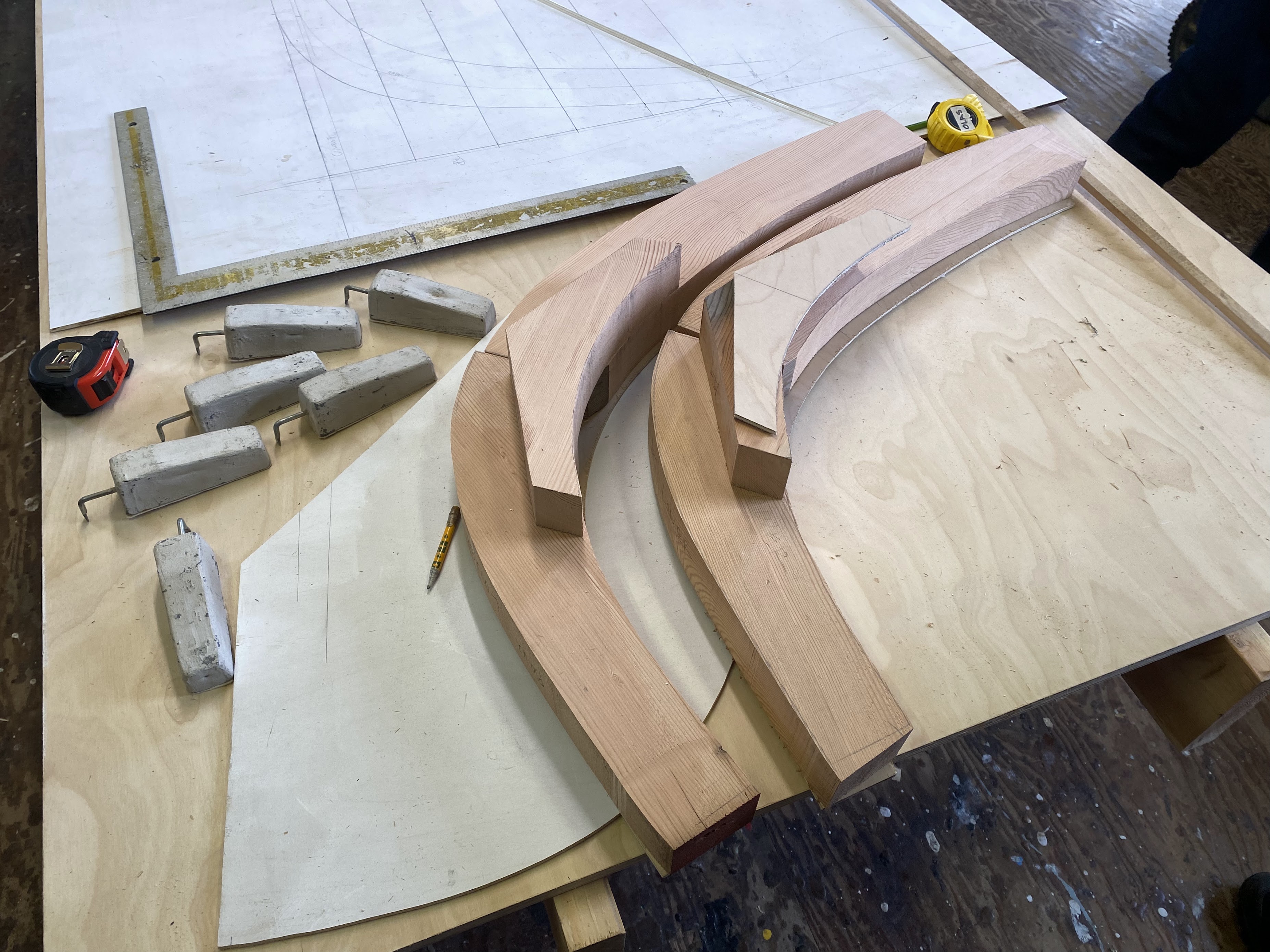
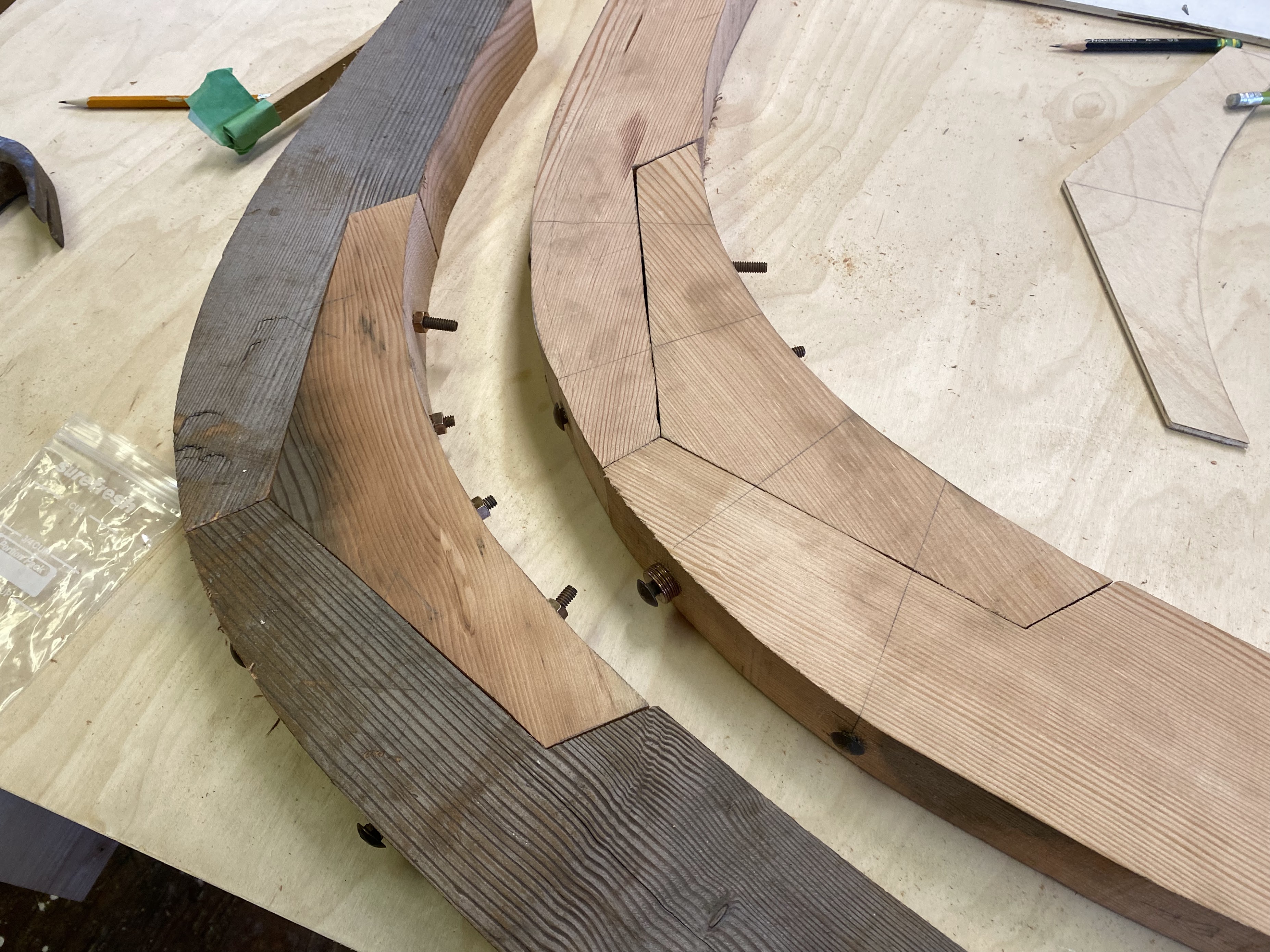
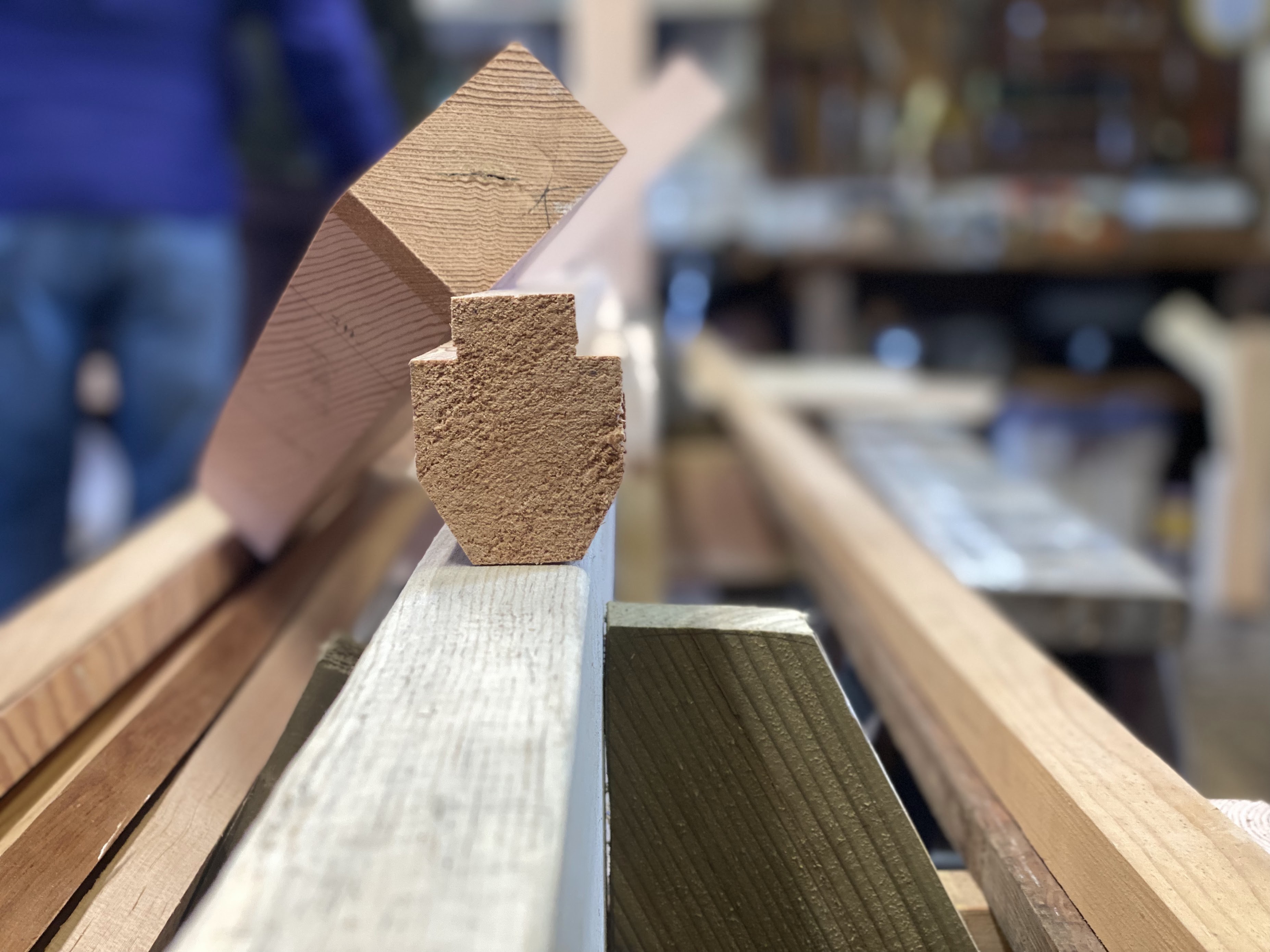
The stem and stern post are each built up of 3 pieces of Douglas fir, bolted together with sealant. They’re a tricky shape to drill, but with careful positioning on our drill press, and a watchful eye of several onlookers, we managed to get them drilled within tolerance.

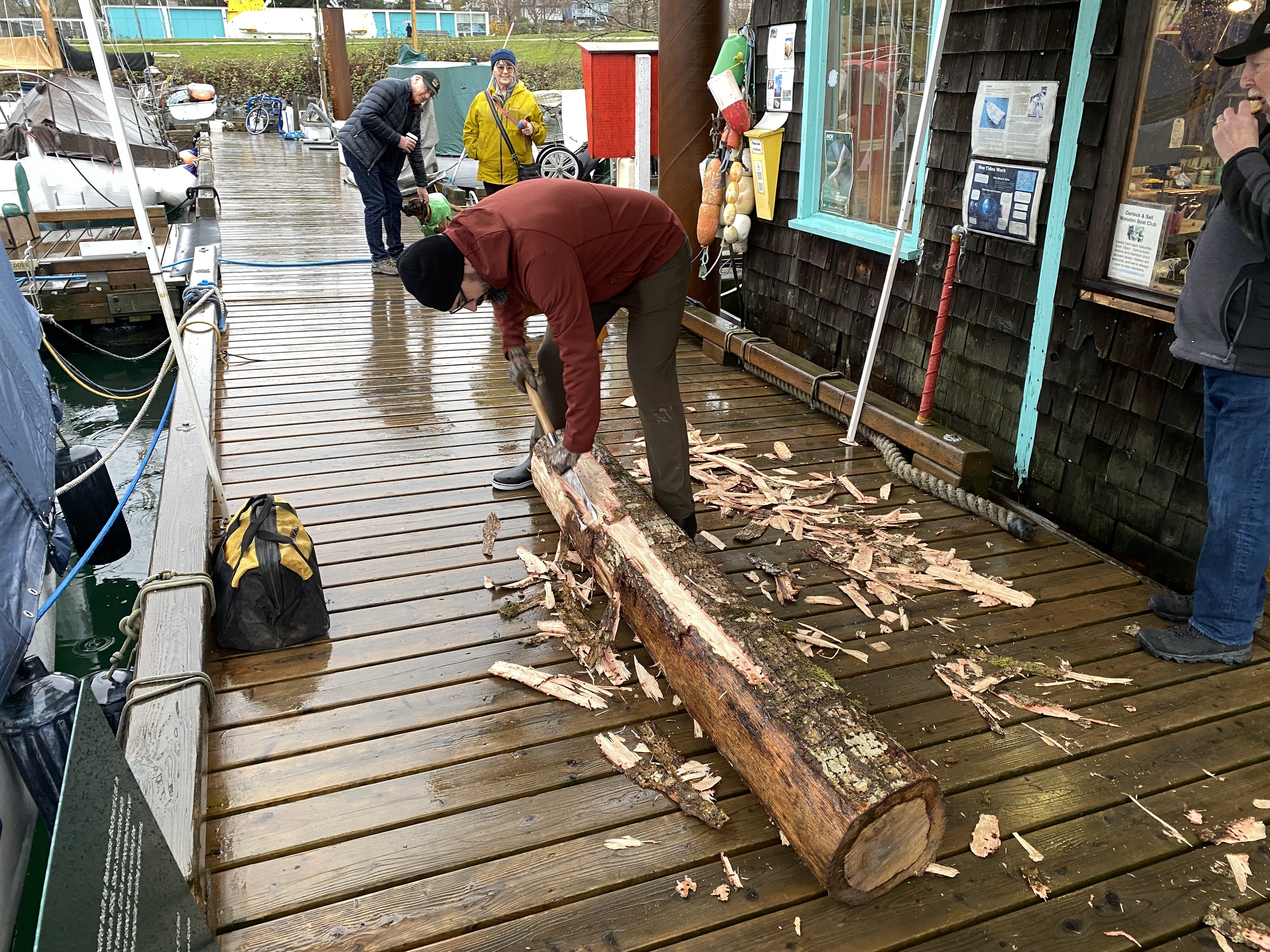
We were the happy recipients of a length of English Oak, part of a tree that had been felled in the neighbourhood of one of our members and local shipwright, Eric Fisher. He wrestled the log down the ramp, where we stripped the bark and Arnt ripped it in half with a chainsaw. Arnt then took it home to rip it to strips on his bandsaw. This will become the ribs for the boat. Oak is sought-after for ribs, and ideally is air-dried, not kiln-dried, so this is ideal for our purposes – thank you so much, Eric!!! We got all the ribs we need, plus quite a few spares to make up for breakage.

We did a small sample of rib and plank fastening with a copper rivet, just to get an idea of the dimensions we’ll be working with.

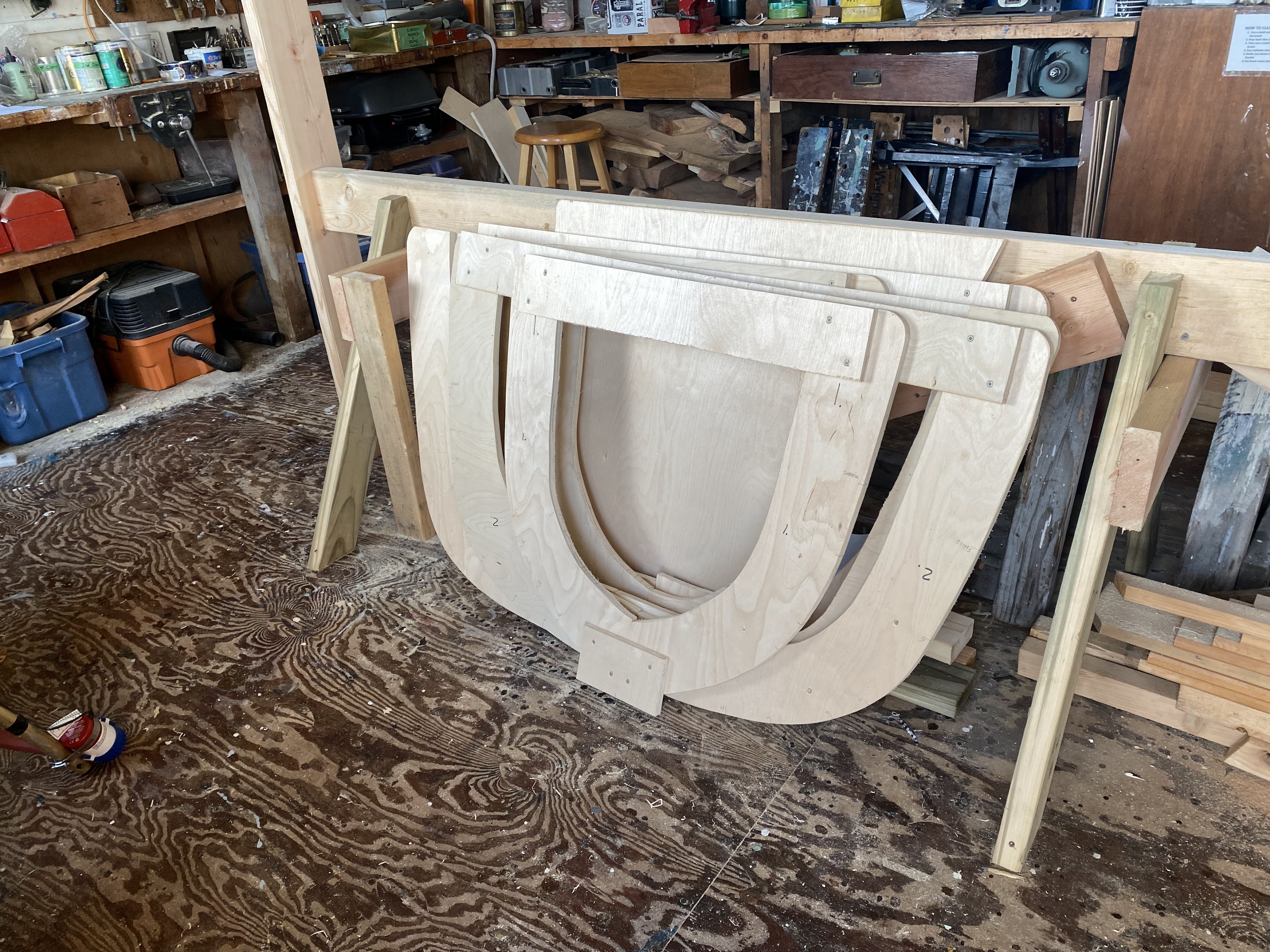
The moulds were cut to shape, the two halves clamped together and smoothed, then assembled into the full shape.

We had initially planned to build the boat upside-down, and had built the strongback for that. In our discussions at the shop, as we were talking through the process, we realized that building it right-side-up would give us better access to the inside when we fasten the rivets. So, we changed course and modified the strongback accordingly, installing a straight 2×6 on edge to hold the centerline assembly (keel, stem and stern post).

This past Saturday we assembled the centerline, and installed it and the moulds on the strongback and squared up the moulds. Next up will be installing some bracing to the upper beam of the strongback to make sure the moulds don’t get distorted as we install the Ribbands, the lengthwise pieces that will give us something to steam-bend the ribs into.


Other happenings around the shop:

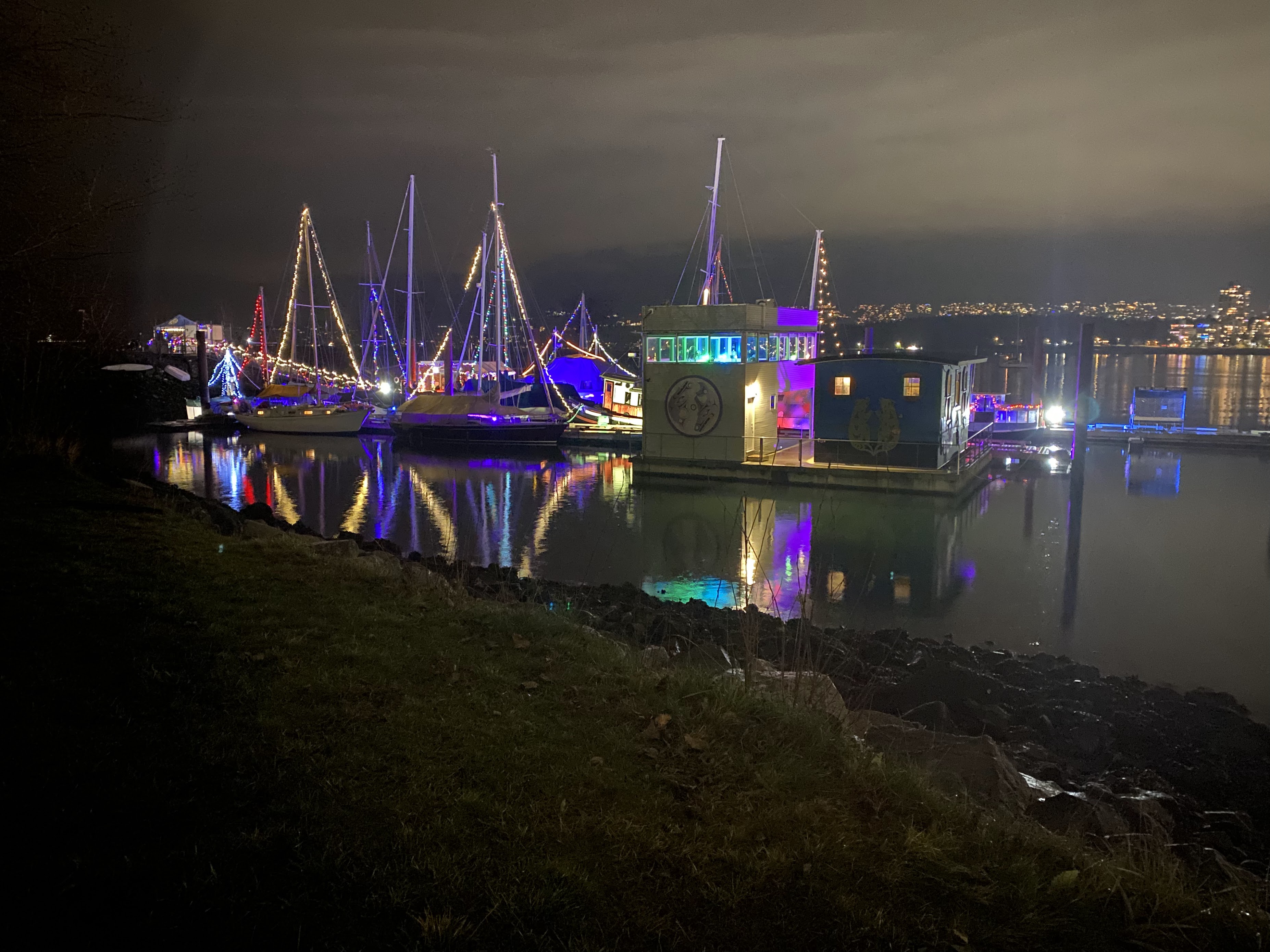
We participated in the Vancouver Maritime Museum’s Light up the Harbour event, where all the boats got decorated for the season, the Museum provided hot chocolate and carolers, and invited visitors to enjoy the harbour at night. We had a great turnout, despite somewhat wet conditions, and enjoyed introducing people to our club and our project.

Christmas treats were plentiful and welcomed, and one of the best was a box of delicious shortbread cookies and a card, along with a generous donation in memory of Gerry Fuchs, our long-time member who passed away a little over a year ago. Thank you Sharen, Jessica and Davita for your thoughtful gift – we’ve purchased a set of drill bits which we’ll use often.

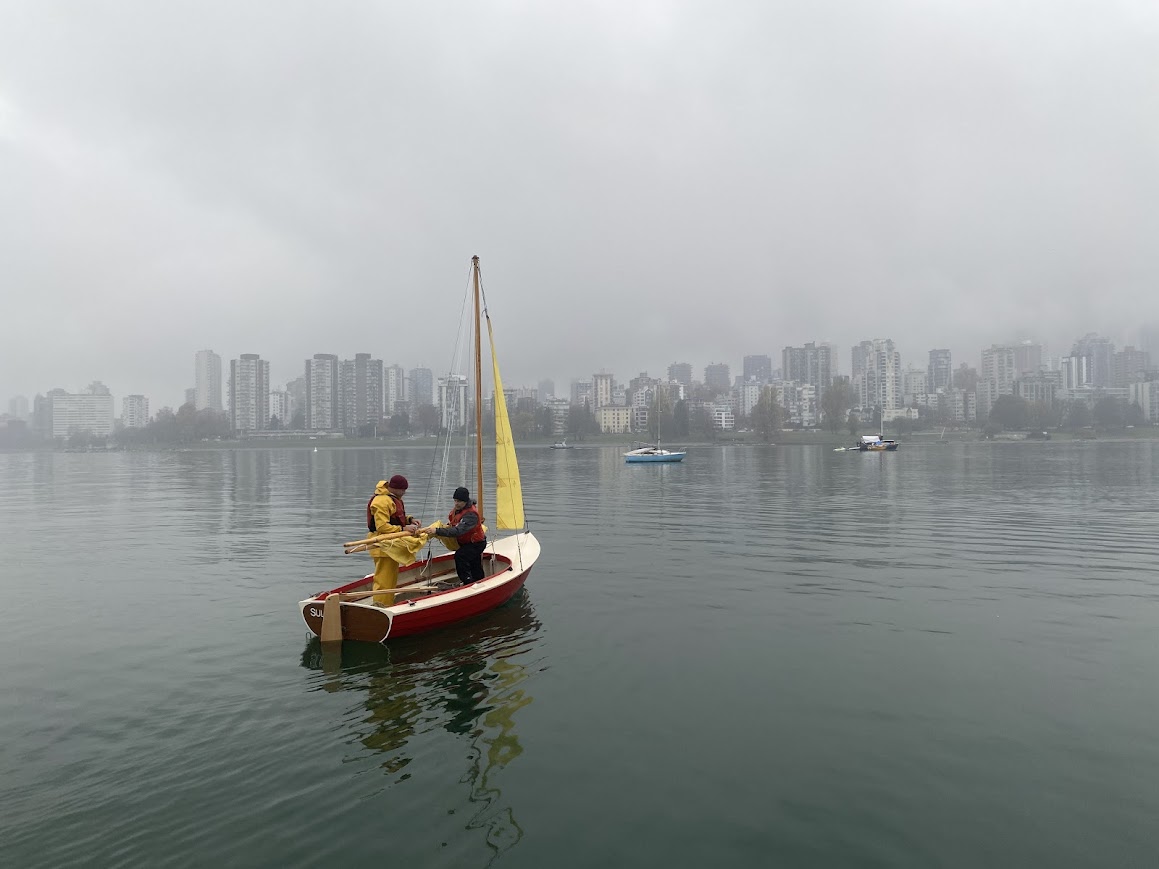
Winter sailing has been excellent, with our boats getting a lot of enjoyment, rain or shine!

Hope you can make it to the shop to participate or check out our progress!